Wednesday, December 28, 2011

Yoona to MC 2011 SBS Gayo Daejun

After a successful stint as MC for the KBS Entertainment Awards, Yoona has been chosen to MC this year’s Gayo Daejun on SBS. She will be MCing along with singer Lee Seung Gi and actress Song Ji Hyo. This year’s show will feature a special ballad stage, sexy performances from divas and a dance battle from many boy bands.

It’s great to see Yoona widening her horizons and adding MCing to her repertoire of talents. As with many of the other girls, she is becoming not just a great actress/singer, but an all around and versatile entertainer. Look forward to the show on December 29th at 8:50PM KST. Yoona hwaiting!

Vietnamese ranked among world’s most beautiful

Online entertainment review website TC Candler ranked Vietnamese-Australian Natalie Tyler Tran at No.17 in its “100 Most Beautiful Faces 2011” list.

TC Candler, well-known for its non-commercial movie review founded its annual independent critic list “100 Most Beautiful Faces” in 1990.

Since then, it has chosen top beauties based on their popularity, grace, elegant and also cultures, lifestyle and profession.

Born in 1986 to Vietnamese parents in Sydney, Natalie (or Tran Dinh To Han in Vietnamese) is a world famous video blogger whose Youtube channel has been subscribed by nearly 1 million viewers around the world.

This year marks the second time she has made it to the list. Last year, she was No.88.
Considered as the most subscribed Australian Youtuber of all time, Natalie’s videos have more than 350 million views and she has been widely covered by both local and international media.

Her video capture stories from the young woman’s daily life spiced with a sense of humor and creativeness.

The young beauty studied digital media at the University of New South Wales and enjoys traveling and Internet communication in her free time.

British young actress Emma Watson who rose to fame playing “Hermione” in the “Harry Potter” sequence tops this year’s “100 Most Beautiful Faces”, followed by American actress Camilla Belle, singer Rihanna and Australian actress Emily Browning.

Korean actress Song Hye Kyo who is No. 5 is the most beautiful face from Asia.

Vietnam tourism announces new slogan

“Vietnam – Timeless Charm” and the five petal lotus have been selected as the slogan and symbol of Vietnamese tourism in 2012-2015 term.

The Vietnam National Administration of Tourism (VNAT) said on Dec. 27 in Hanoi that the new slogan and symbol were approved by Minister of Culture, Sports and Tourism Hoang Tuan Anh and that they will be used for the national tourism promotion programme between 2012 and 2015.

The revised slogan will replace the existing one “ Vietnam – Hidden Charm” in 2005-2011.

VNAT General Director Nguyen Van Tuan said the tourism sector became a spotlight in the context of Vietnam ’s difficult and challenging economy. In 2011, the tourism sector attracted 6 million international arrivals, and served 30 million domestic tourists, earning 130 trillion VND.

The sector has set a goal of receiving 6.5 million foreign arrivals, an 8.3 percent increase compared with 2011, and serving 32 million domestic tour arrivals, a 6.67 percent increase, earning 150 trillion VND in 2012, he said.

Thieves steal $47.5K from police official

Thieves have burglarized the house of Major-General Vu Hung Vuong, Deputy Head of the General Department for Crime Prevention under the Ministry of Public Security, and stolen assets worth around VND1 billion (US$47,585).

Police in Hanoi’s Cau Giay District, where Vuong and his family reside, said the heist occurred around 8:50pm on December 25, when nobody was home.

The police said the thieves took VND550 million in cash, 21 taels of gold, US$500, AUS500, KRW (South Korean won) 40,000, a silver necklace, a watch, a knife, and a pair of scissors.

Police are investigating the crime.

Vietnamese woman killed by husband in Taiwan

The police in Taoyuan, Taiwan, have arrested Chen Li Sheng for killing his 29-year-old Vietnamese wife, Pham Thi Thanh Truc, and throwing her body into the sea 6 days ago.

The arrest of Sheng was made at 10 pm on December 26, 2 days after local residents found Truc’s body floating in the sea near Taoyuan, where Sheng and his wife had been living, Nguoi Lao Dong Newspaper reported.


According to the police, Truc got married to Sheng, a taxi driver, through a broker in 2003. The couple has 2 daughters, 5 and 6 years old. Sheng often picked quarrels with Truc and beat her since she could not give birth to a boy. Suffering from domestic violence, Truc had asked for protection from local authorities 3 times, but Sheng continued to abuse her. On December 22, the couple arrived at a local court for divorce procedures. Later on the same day, Sheng strangled Truc to death and then tied a piece of rock to her neck before throwing her body into the sea.

Calling for help

On December 27 afternoon Pham Thi Hoa, Truc’s sister, came to Nguoi Lao Dong Newspaper’s headquarter in Ho Chi Minh City to ask for help. A reporter then took Hoa to the Taipei Economic and Cultural Office in HCMC for assistance.

Lin Chen Chou, an official at the office, said he had been informed of the tragedy and was working with the HCMC Foreign Affairs Department and the Vietnamese Economic and Cultural Office in Taiwan to handle the case.

The office asked Hoa to submit a report on the incident to the HCMC Department of Foreign Affairs, asking the agency for assistance in going to Taiwan to receive and repatriate Truc’s body. The office will grant a visa to the representative of Truc’s family right after the person obtains a passport, Lin said. In Truc’s case, the Taiwanese Committee for Compensation to Criminal Victims is likely to help in demanding compensation, Lin said. “We are very sorry,” he said.

An aborted dream

Hoa told Nguoi Lao Dong that in a conversation with her from Taiwan, Truc had said tearfully, “I accepted the marriage only because I wanted to help our family, but now, I’d rather die than live in such a terrible situation…”

Truc got married to Sheng with the hope that she could save money to build a house for her parents, who have been long living on a boat. But Sheng gave her family just VND5 million (US$238) as payment for the wedding held in HCMC, Hoa said. After Truc left Vietnam, her family incurred a debt of VND2 million which they had spent on her wedding ceremony, Hoa said.

When Truc arrived in Taiwan, she knew that her husband’s family was poor too and had to live in a rented house. During her 9 years in Taiwan, Truc returned to Vietnam twice and had no money to buy any gift for her family. In one of the two occasions, she had to borrow VND4 million from an acquaintance in Vietnam to buy a necklace as a present for her mother, Hoa said.

Tuesday, December 27, 2011

The 10 Rarest Animals In The World

Endangered, hunted, smuggled and now some would say bandoned, these animals have the smallest chances of recovery out off all the Earth’s creatures. Last ear, studies shown that there are at least 35 different nimals with world populations of under 1000. But which are the rarest, the animals on the brink of extinction? We have rounded up a list of 10 of the rarest animals in the wild. These animals are so rare, they might disappear forever, and they’re not alone!
1. The Pinta Island tortoise – Without argument, this turtle is one of the few species of Giant Galapagos tortoises and the rarest animal in the world since there is only one left alive. Lonesome George is the sole surviving member of the Pinta Island race, the giant tortoise being a symbol for the fragility of the Galapagos islands, and a constant reminder for vigilence and conservation of the species. The species was considered extinct until 1971, when a lone example was located by rangers. Since then, the Charles Darwin Research Station has been searching for a female tortoise, even posting a reward of $10,000 to those that find one.
2. Baiji (Yangtze River Dolphin) – With no more than a few tens of individuals, Yangtze River Dolphinthe dolphin is one of the world’s rarest mammals, and a victim of China’s breakneck economic growth, competing for food with the human beings. It has been driven to extinction due to the activity in 50 years, this being the fourth time when an entire evolutionary line of mammals has vanished from the face of the Earth since the year 1500. The main reason for this fact are the numerous dams and barrages, built starting in the 1930’s, that have fragmented the population and reduced the amount of available habitat. There are news that the species is functionally extinct, experts still searching for members of the species. Fingers crossed!

3. The Vancouver Island Marmot – This marmot is found only in the high mountainous regions of Vancouver Island, in British Columbia, the Canadian Species at Risk Act listing it as endangered in May 2000. In 1998, the population reached an all-time low of 75 individuals, a captive breeding programme being started during that time. In captivity, there are around 90 Vancouver Island marmots in four breeding facilities, while an estimated 30 members of this species live in the wild ibn 2004. The ultimate goal is to restore a sustainable population of 400-600 Vancouver Island marmots in the wild, so there’s still much to be done. 2005 was a successful year, with 150 individuals in captivity and over 44 pups born.

4. Seychelles Sheath-tailed Bat – Inhabiting the central granitic islands of the Seychelles Islands north of Madagascar,Seychelles Sheath-tailed Bat the bat is part of our list, being one of the most endangered animals since fewer than 100 are believed to exist in the world. It was once commonly found in Seychelles, but the species has undergone a dramatic decline in population during the mid to late 20th century. More research needs to be done in order to understand how the species behave and what needs to be done in order to save them. Scientists believe that, with a heavy amount of effort, 500 individuals may be sufficient to guarantee long-term persistence of the population.

5. Javan Rhino – This scarce animal is one of the rhino species with fewer than 60 animals surviving in only two known locations: one in Indonesia and the other in Vietnam. Though once widespread throughout Asia, by the 1930’s the rhinoceros was nearly hunted to extinction in Peninsular Malaysia, India, Burma and Sumatra. It was poached for its horn, that is believed to have medicinal uses, and driven to extinction to the intense agricultural practices. Even with all the conservation efforts, the Javan rhinoceros’ chance of survival is small: the population is reduced, hence there are risks of disease and inbreeding.

6. Hispid hare – Also called the “bristly rabbit”, this hare has been recorded along the southern foothills of the HimalayanHispid hare mountain chain, Nepal, , Bengal, and Assam. Deforestation, cultivation, and human settlement had the most negative impact on the species, isolating the rabbits in Uttar Pradesh, Bihar, West Bengal and Assam. This animal was feared extinct in 1964, but in 1966, one was spotted. There were an estimated 110 hispid hares worldwide in 2001, numbers continuing to plunge due its unsuccessful adaptation to captivity.

7. Northern Hairy-nosed Wombat – In the 19th century this species of wombat was present in New South Wales and Victoria but now can only be found in a small national park near Epping Forest Station in tropical Queensland. While this area has been protected as a National Park, the native grasses that the wombat eats are overtaken by non-indigenous plants. The Northern hairy-nosed wombat is the rarest Australian marsupial, and probably the world’s rarest large mammal. In the latest population study, there are an estimated 113 (range 96 to 150) individual. A major recovery program is underway, funded by the Queensland and Commonwealth governments to the tune of $250,000 per year.

8. Tamaraw (Dwarf Water Buffalo) – Found in the the island of Mindoro in the Philippines, the tamaraw is the onlyDwarf Water Buffalo endemic Phillipine bovine. In 1900 there were an estimated 10,000 tamaraw on Mindoro, 120 in 1975, 370 in 1987 . It was declared critically endangered species in 2000 by the World Conservation Union and remained so until today, being threatened by agriculture, hunting or disease brought by domestic species. The current population was estimated in 2002 at a number between 30 and 200 individuals. Although protected by law, the illegal capture and killing of this species continues to occur.

9. Iberian Lynx – The Lynx, the most endangered of the world’s 36 cats, stands on the edge of extinction. This lynx was once distributed over the entire Iberian Peninsula but now its area is severely restricted in Andalusia. Threatened by destruction of habitat and of its prey, the cat was killed by traps set for rabbits or hit by cars as the number of roads increase. The Spanish Government is now in the process of developing a national conservation effort to save the Iberian Lynx. Studies from March 2005 have estimated the number of Lynx to be as few as 100, down from about 400 in 2000. On March 29, 2005, the birth of 3 cubs, the first born in captivity, was announced, a hope for the future reintroduction of the species.

10. Red Wolf – This wolf is a smaller and a more slender cousin of the gray wolf, historically ranging from southeasternRed Wolf United States to Florida and Texas. Now, their home is the 1.7 million acres throughout northeastern North Carolina, including Alligator River National Wildlife Refuge and Pocosin Lakes National Wildlife Refuge. Only 20 pure red wolves were estimated in 1980, however the number increased to 207 captive red wolves, found in 38 captive breeding facilities across the United States. With the successful breeding programs, over 100 red wolves currently live in the wild.

Runner-up. Dwarf Blue Sheep – The Dwarf Blue Sheep or Dwarf Bharal Pseudois schaeferi is an endangered species of caprid found in China and Tibet. The dwarf blue sheep population in the world has declined to a total of 70–200 individuals, currently being listed as endangered by the International Union for Conservation of Nature. The species is hunted, and in their limited range cannot escape from humans and livestock. As of 1997, China did not recognize them as a seperate species so efforts to conserve the species have not been initiated.

The world's best animal

This creature is most probably the creation of an environmental problem. Children at a nursery in Weston-super-Mare, England spotted the three headed frog hopping in the garden.

Source: BBC News

The blog famous cyclops kitten, Cy was first thought to be a joke photo manipulation. Living only for a day, It had only one eye and was noseless.
Source: News.com

The most infamous headless chicken, Mike wowed the world by living for 18 months which indefinitely entered it into the Guinness World Records. It could still live becuase most of his brain stem and ear was left on his body.

Nope this is not photoshop manipulated. A female polar bear named Pelusa turned purple after she was given a special treatment to clear up a skin condition. This has attracted crowds at the Mendoza City Zoo in Argentina. The fur has returned to normal after a few days.
Source: NW Botanicals

Genetic mutation called ‘feather duster’ of a parakeet.
Source: Green Apple

Dolphins has taken a pink hue in the Pear River Delta situated between Hong Kong and Macau. It is not known why they are pink in colour but several assumptions include the lack of natural predators or the pink colour is a byproduct of blushing to regulate body temperature.
Source: 2 Dolphins

The two-month old animal, named Cham Leck which means ‘strange,’ was given to monks at a local pagoda by a farmer who feared the six legged cow would bring him bad fortune.
Source: Steve Quayle

The hooded seal has a large elastic nasal cavity and when fully inflated resembles a large black ruber ball. They are large aggresive mammals that can exceed 3m in length and 400kg in weight.

The large ocean sunfish vies for the title of strangest fish in the sea. It has an almost circular, flattened body. It weighs up to 2 tons and 3m long. The head is almost a third of the whole body length.
Source: Earth Window

If you had your facts about the Siberian tiger being the largest cat, then you are wrong. The liger is the world’s largest cat, a cross breed between a male lion and a female tiger. They exhibit conflicts between the social habits of the lion and solitary habits of the tiger.
Source: Wikipedia

Big Boobed Asian Girls Will. Drop. Your. Jaw.

Are you ready for this ??? I can’t hear you!!! Sit back and relax because what you’re about to see in the next minutes will blow your mind. I’m pretty sure we all have a thing for Asian women but you know what’s even hotter than Asian women? Beautifully busty Asian girls that are so hot that will make you howl at the moon.
I don’t know exactly why we like Asian girls so much, I just know that the hotness of a big boobed Asian girl is simply off the charts. So… if you like women from the Far East and if you’re also a tit man, then this massive gallery of big boobed Asian girls is exactly what you need today. Enjoy!


Top 10: Most Dangerous Animals in the World

The top ten most dangerous and most violent animals in the world. With high quality pictures and the amount of fatalities a year. And yes, humans would take the number one spot but I have not included them in this list.

1. The Bear
As humans, we share our world with many different species and animals. I am going to take you on adventure showing you the 10 most dangerous animals in the world! 10. The Bear Like Yogi Bear, bears can be your best friend and make you just want to cuddle with them. But in the wild, are they the same way? Bears are extremely dangerous met 1 on 1 in the wild which gets them the #10 spot in most dangerous animal.


2.The Shark
As children, we were all raised to be scared of sharks. From the blood and teeth in the movies, we would hate them. Well, sharks aren’t as bad as they are in the movies but they sure are nasty killers.


3.The Jellyfish
Jellyfish are interesting but extremely scary creatures. From big and annoying jellyfish to extremely small, deadly ones, jellyfish make their way to #8. When making contact, the jellyfish’s tentacles can paralyze a human and manifests itself as cardiac arrest.

4.The Hippopotamus
Mostly found in Africa, the hippopotamus is a large ruthless animal that lives in water and land. Its mouth can open up to 4 feet and can crush like a sledgehammer. With these characteristics, it is bound to make it into the #7 spot.

5.The Elephant
Despite their friendly appearance and cleverness, elephants have been known to attack without warning, sometimes killing zookeepers whom they’ve known for 15 years. With their size and huge tusks, it is easy to imagine why the elephant made it to spot #6.

6.The Crocodile
Mostly found in Africa and Australia, the crocodile is one of the world’s most deadliest animals. The crocodile has an amazing speed and bone-crushing jaw force. One meal will last it a while so it can wait under water to plan it’s next attack.

7.Big Cats
Animals such as lions, tigers and jaguars all fall into #4. With outrageous speeds, you are sure to be caught if you take the risky chance and run(if you do ever fall in to that situation, do not turn and run and rather look it in the eyes and open your coat to make you look bigger).

8.The Scorpion
Though much smaller than most of the creatures behind it, the scorpion has a venomous sting. The scorpion most likely causes more fatalities than recorded due to the fact that the attacks occur in isolated places as it is their habitat.

9.Venomous Snakes
More than 450 species of snakes are venomous and 250 capable of killing a man enlarging the chance of a snake you encounter to be extremely dangerous. Attacks occur mostly in Africa, Asia and North America. Humans are a great prey for venomous snakes due to the bloodstream. Once injected with venom, it runs through your whole body.

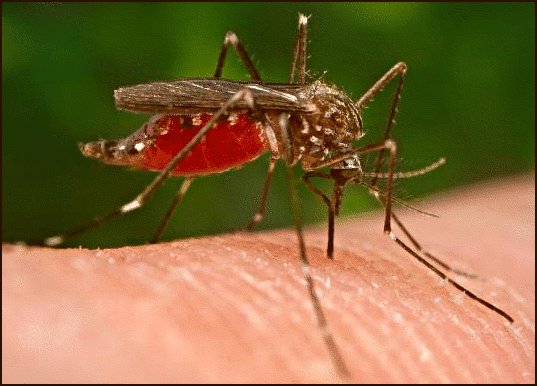
10.The Mosquito
I bet you were expecting the most vicious most scary animal but the biggest killer in the whole world… is the mosquito. Thanks to its ability to spread diseases with an alarming efficiency, the mosquito makes its way into #1. Best known for spreading Malaria, mosquitoes also spread elephantiasis, yellow fever and West Nile Virus.